
The Integrated Translational Sciences Award (ITSA) has long supported COG research that moves promising immunotherapies from the lab to clinical trials. The loss of this critical funding now puts future discoveries and treatment advances for children and adolescents with cancer at risk.
For decades, chemotherapy and radiation have helped save the lives of children with cancer. Today, nearly 85% of all children and adolescents diagnosed survive. But many survivors face lifelong side effects that can affect things like their hearing, vision, and fertility, as well as impacting learning and other aspects of daily life.
At Children’s Oncology Group (COG), researchers are working to develop new, targeted therapies and immunotherapies that treat pediatric cancers with more precision, reducing damage to healthy tissue. Some strip cancer’s ability to conceal itself from the immune system, while others encourage a patient’s immune system to fight cancer more effectively. These drugs are personalized to a patient’s tumor — its specific genetics and behavior.
Before these treatments can be used with patients, they must be rigorously studied in the lab and tested through clinical trial. This process is known as translational research.
Translational research starts in the lab. Scientists request samples from a biobank to study cancer cells. Using 3D cell cultures and next generation sequencing machines, they discover a cancer cell’s behaviors and genetic features. Using that information, they look for agents that might be a good match. They study how tumor cells respond to promising treatment in cell cultures and animal models. If those tests are successful, promising treatments are “translated” and move to the bedside. Clinician researchers enroll patients on clinical trials to see how children’s bodies respond to treatments that worked well in the lab.
But transforming findings into usable cancer treatments takes time. For example, in March 2026, the FDA approved a checkpoint inhibitor, nivolumab, for use in newly diagnosed, late-stage, classic Hodgkin lymphoma in patients ages 12 and over. The research behind this breakthrough began in the early 1990s.
Children and adolescents are not small adults.
Adult tumors are like a mixed bowl of Halloween candy. Kids’ tumors are more uniform, like a bowl of yellow M&Ms. Most kids’ tumors result from a developmental mistake their bodies made before birth or during a growth spurt.
If we find a drug that effectively treats cancer with a specific feature (color=yellow), that drug may work well to treat a child’s cancer. But if a drug targets a feature that kids’ tumors don’t have (color=green), it won’t work for kids.
Some types of cancers are unique to childhood, including neuroblastoma, retinoblastoma, and most pediatric brain tumors. In 2015, the FDA approved a targeted treatment called dinutuximab for high-risk neuroblastoma. That approval was only possible because of two decades of translational research.
For other cancers, the same diagnosis in a child and an adult may look and behave very differently. We have only learned about these differences by doing translational research and clinical trials.
Conducting this type of research requires access to patients, biospecimens, and clinical trial infrastructure at a scale that no one hospital or institution can provide.
COG scientists benefit from the world’s largest pediatric oncology biobank, with over 400,000 blood, tissue, and tumor samples from 60,000 patients. Approximately 80% of children and adolescents with cancer in the US are treated at COG member institutions, and 38% enroll in a COG study.
Most COG treatment trials include biology research questions, looking for and validating biomarkers that predict a patient’s response to treatment. Through its network of more than 220 hospitals, COG trials studying targeted agents are available to children and adolescents close to home. Treatment close to home allows a family’s network to rally around them with meals, school pickups, and emotional support.
For the past decade, COG scientists have studied promising immunotherapies through the Integrated Translational Sciences Award (ITSA). In 2026, that program and its $1.4 million in annual funding were eliminated, threatening the research needed to turn discoveries in the lab into clinical trials and, ultimately, better treatment options for children and adolescents with cancer.
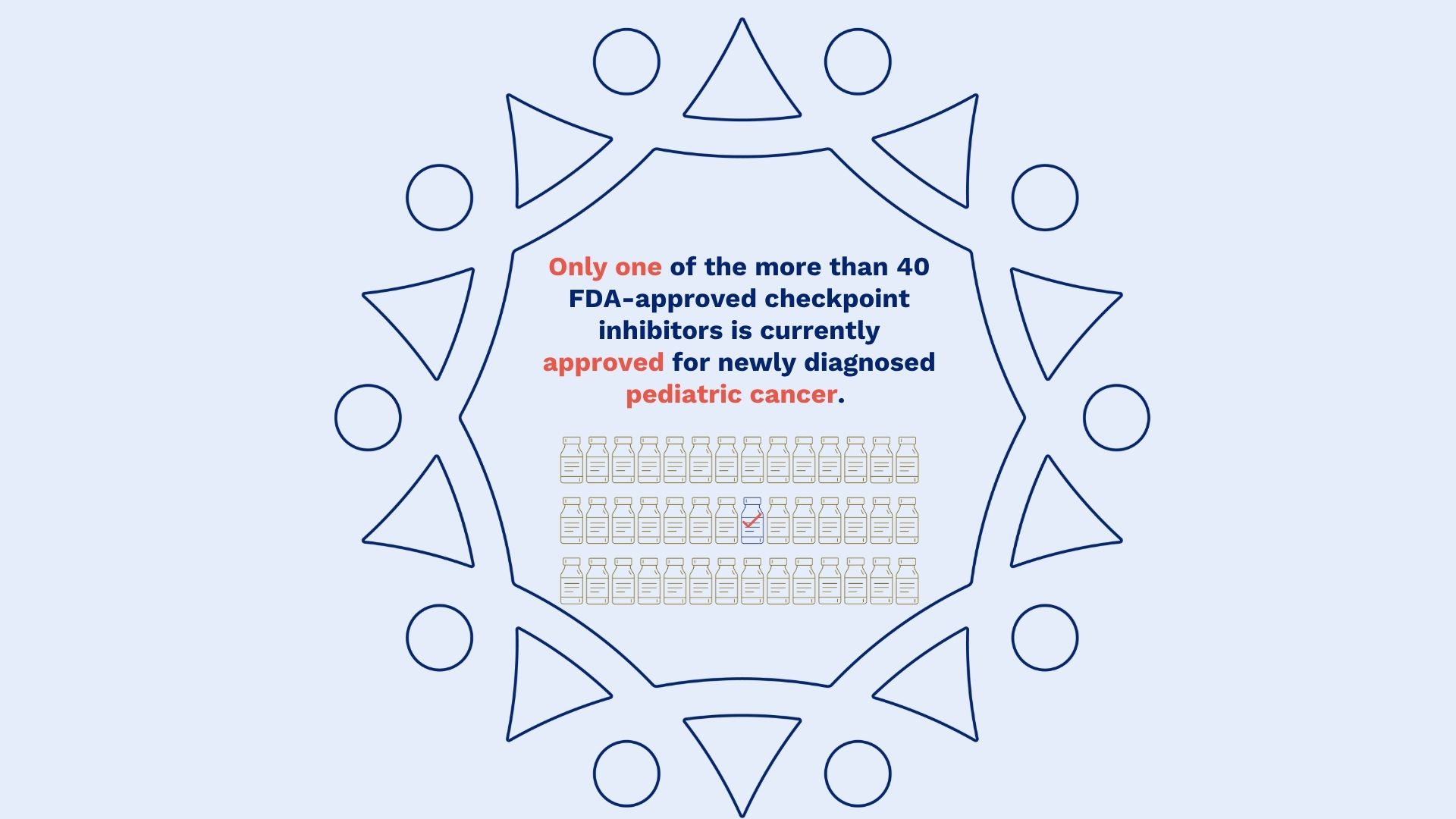
Only one of the more than 40 FDA-approved checkpoint inhibitors is currently approved for newly diagnosed pediatric cancer. Continued investment in pediatric translational research is essential for children and adolescents to benefit from the same pace of innovation and novel therapies seen in adult oncology.
Between the US government and drug companies, nearly $100 billion is spent on cancer research annually. Nearly all of those research dollars are allocated to studying adult cancer.
Stalled discovery in the lab means slower progress for children and adolescents with cancer. Without funding for this work, pediatric cancer patients will wait longer for targeted therapies designed specifically for them. Many will continue to rely on treatments that, while effective, often come with lifelong consequences.
This work must continue.
The future of cancer research is incredibly promising. Targeted therapies are especially hopeful for kids who have decades of living to do after cancer treatment. COG will continue pursuing every possible path to treating childhood cancer more effectively, without damaging survivors’ long-term health.
As the world’s largest pediatric cancer research consortium, COG is uniquely positioned to lead this work. But progress depends on sustained investment.
To continue critical translational research and replace lost federal funding, COG must raise $1.4 million annually.
Every child deserves access to treatments designed specifically for their disease and their genetics. With philanthropic support, promising discoveries can continue moving from the laboratory to the patients and families who need them most.
Receive updates on groundbreaking research, scientific discoveries, and the lives they impact.