
Each September, Childhood Cancer Awareness Month brings greater attention to the children and families whose lives are changed by a cancer diagnosis. Their experiences and stories drive our dedication to this work.
This year, we also want to shine a light on a less visible story: the extraordinary collaboration behind childhood cancer research, and all that must come together to advance it.
Over the past 25 years, collaborative research has continued to transform what is possible for children with cancer. The survival rate for pediatric cancer overall now exceeds 86%. New treatments have emerged. Standards of care have evolved. Researchers have also found ways to reduce the intensity and long-term effects of some treatments while continuing to improve outcomes.
Children’s Oncology Group (COG) has played an important role in that progress. Each year, approximately 9,500 patients enroll in COG-led clinical trials, helping researchers answer questions that can shape the future of childhood cancer treatment. Through Project:EveryChild, nearly 70,000 pediatric cancer patients have enrolled in one of the largest research efforts of its kind, expanding the biospecimens and clinical data available to researchers worldwide.
The impact of COG research is evident in today’s treatments: evidence from COG clinical trials has contributed to approximately 47% of the newly FDA-approved pediatric cancer treatments in the United States since 2000.
There is much to celebrate in how far childhood cancer research has come.
But findings do not happen on their own.
What Makes Research Possible
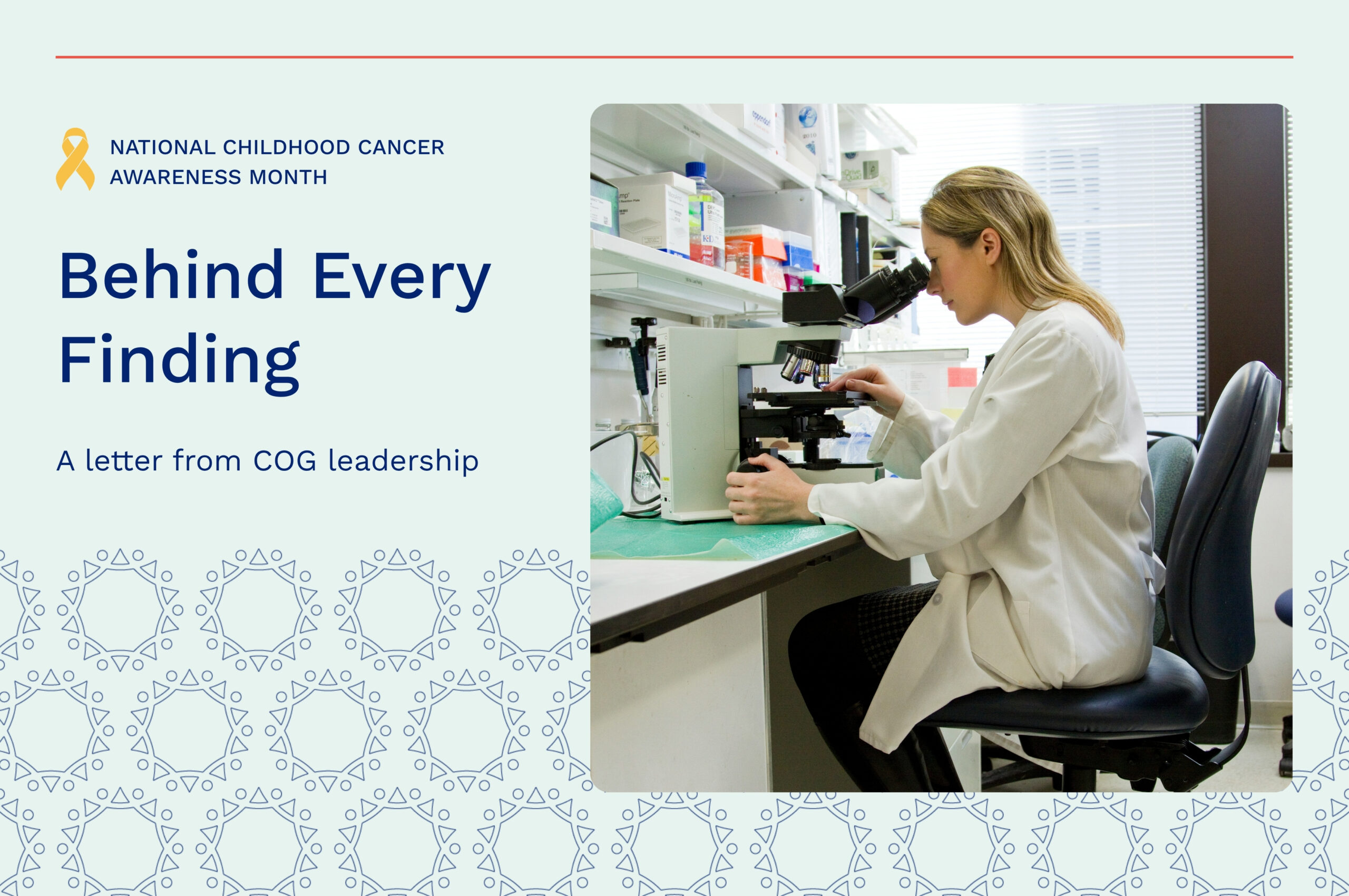
Every day, researchers ask new questions and pursue ideas that could change our understanding of childhood cancer and its treatment. Researchers spend years building the evidence needed to explore promising ideas. Clinicians care for patients while helping translate research into better treatments. Nurses help to guide children and families through clinical trials and care. Protocol and research coordinators manage the countless details required to open and conduct complex studies across institutions. Data managers, statisticians, pharmacists, laboratory scientists, regulatory teams, and many others contribute their expertise to research.
Across the COG network, these individuals contribute distinct expertise, working in coordination to move research forward.
Research also requires sustained investment and support. The people and infrastructure behind this work need resources to pursue promising ideas, answer difficult questions, and keep research moving forward.
And at the center of it all are patients and families.
Every child who participates in a clinical trial volunteers a meaningful contribution to our collective understanding of pediatric cancers, helping uncover new possibilities for other patients. Every family that agrees to share samples or data makes future discoveries possible. Their participation helps researchers answer questions today that may change the life of a child or adolescent in the future.
From Questions to Findings
Last month, we shared the story of COG ACCL2531, a clinical trial studying a relatively simple intervention with the potential to prevent serious infections in patients undergoing treatment for pediatric acute myeloid leukemia. Launching that study required years of development, regulatory review, manufacturing and logistical coordination, philanthropic investment, and collaboration across institutions. If any one piece fell out of alignment, the entire study may have ended before it had a chance to reach the patients it was designed to help.
While the details of every scientific effort differ, the need for collaboration does not.
The power of collaborative research lies in bringing together the expertise, participation, infrastructure, and resources needed to pursue questions at a scale no single researcher or institution could achieve alone. And every answer creates an opportunity to ask the next question.
That is one of COG’s great strengths: a global research network united by a shared mission to cure and prevent childhood and adolescent cancer through scientific discovery and compassionate care.
The Work Ahead in Childhood Cancer Research
Awareness matters because the work is not finished.
There are still childhood cancers for which outcomes remain unacceptably poor. There are children whose cancer returns after treatment, and survivors who live with serious, lifelong effects of the therapies that saved them.
More questions remain, more discoveries to pursue, and more opportunities to improve how we treat childhood cancer. Advancing that work requires not only continued research, but greater understanding of what it takes to make that research possible.
This National Childhood Cancer Awareness Month, we celebrate how far research has brought the extraordinary community and us behind that progress. Because every finding holds the potential to change a future.
With gratitude,
Douglas S. Hawkins, MD
Group Chair, Children’s Oncology Group
CEO, Children’s Oncology Group Research Foundation
Lia Gore, MD
Vice Chair, Children’s Oncology Group
Chief Strategy Officer, Children’s Oncology Group Research Foundation
Subscribe below to receive updates on groundbreaking research, scientific discoveries, and the lives they impact.