
Today’s research. Tomorrow’s possibilities.
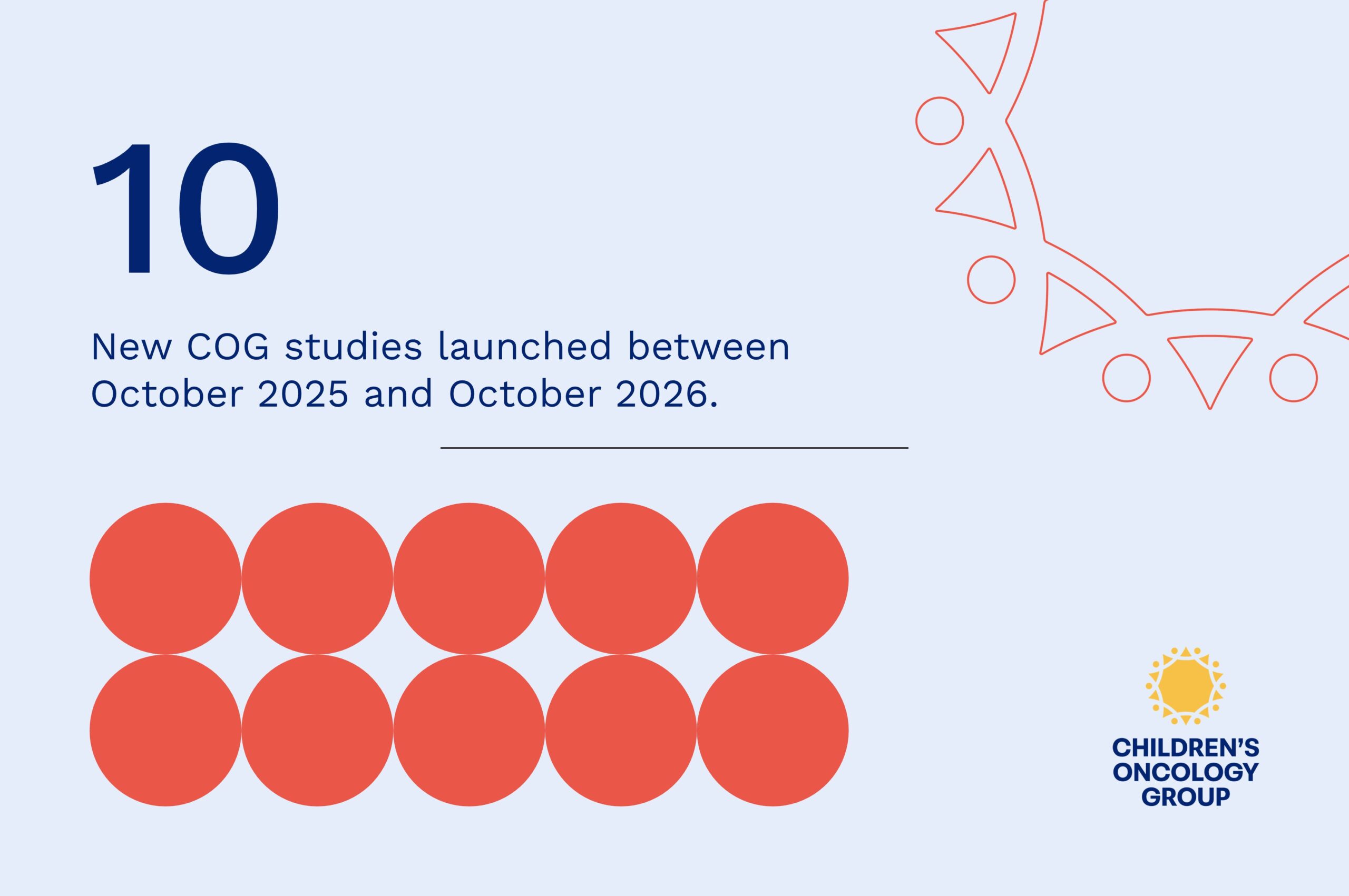
In the year between our 2025 and 2026 Fall Group Meetings, Children’s Oncology Group (COG) has activated 10 new research studies, each with the potential to improve treatment, outcomes, and long-term quality of life for children, adolescents, and young adults facing cancer.
From investigating new treatments for difficult-to-treat cancers to reducing serious complications and informing more personalized care, these studies reflect the work undertaken during the past year that could shape the future of pediatric cancer care.
Exploring New and Improved Treatments
Seven of the newly activated studies investigate different approaches to treating leukemia, lymphoma, rhabdomyosarcoma, Ewing sarcoma, neuroblastoma, and other solid tumors.
Rhabdomyosarcoma: For children with intermediate-risk rhabdomyosarcoma, determining the most effective treatment approach remains an important question. ARST2531 compares two chemotherapy regimens, examining their effectiveness and treatment-related effects.
Neuroblastoma and Other Solid Tumors: When cancer returns or progresses despite treatment, finding new options becomes especially important. ANBL2421 is investigating whether adding a new drug to chemotherapy and immunotherapy may improve response in children with neuroblastoma.
For children with other relapsed or treatment-resistant solid tumors, AFFI2513 takes a different approach, studying the safety and appropriate dosing of a targeted therapy.
Acute Myeloid Leukemia: For children with high-risk AML who have undergone stem cell transplantation, preventing the cancer from returning remains a critical concern. PEPN2413 is studying the safety and appropriate dosing of a combination of medications given after transplantation.
Ewing Sarcoma: AEWS2431 investigated adding a new drug combination to standard chemotherapy for metastatic Ewing sarcoma.*
*AEWS2431 subsequently closed after enrolling two patients when the pharmaceutical company discontinued its drug supply.
Leukemia and Lymphoma: For children, adolescents, and young adults whose leukemia or lymphoma has returned or isn’t responding to treatment, additional options are urgently needed.
Another study, AFFI2521, is investigating a combination of targeted therapy, chemotherapy, and immunotherapy for certain forms of treatment-resistant leukemia. AFFI2522 is studying a CAR T-cell therapy that modifies a patient’s own immune cells to recognize and attack cancer.
Improving Care Beyond Cancer Treatment
Cancer research isn’t limited to finding better treatments. It also examines how to prevent serious complications and improve the care patients and families receive during some of their most difficult moments.
Preventing Bloodstream Infections: Children receiving treatment for acute myeloid leukemia face the risk of serious bloodstream infections. ACCL2531 is investigating whether dental wipes containing xylitol can help prevent infections caused by bacteria found in the mouth.
Improving End-of-Life Care: For children nearing the end of life, the quality of care and support they and their families receive is critically important. ALTE24C1 gathers insights from bereaved parents to identify opportunities to improve end-of-life care for children with cancer.
Informing More Personalized Approaches
For children and adolescents with rare cancers, determining the most appropriate treatment can be particularly complex.
Melanoma and Related Tumors: Young patients with these cancers may face difficult decisions about surgical treatment. ARAR2421 is examining how pathology and molecular information can inform risk assessment and surgical decisions, potentially helping physicians tailor care and avoid unnecessary procedures.
Learn more about clinical trials and their role in advancing childhood cancer research.
Building Futures Together
Behind each of these studies is COG’s collaborative research network that brings together pediatric cancer experts across hospitals, institutions, and research disciplines around the world.
Childhood cancers are relatively rare, and individual diagnoses can be rarer still. A single hospital may see only a handful of patients with a particular diagnosis each year, making it difficult to answer important research questions independently.
Through COG, researchers can develop and conduct studies across participating institutions, bringing together the specialized expertise, patients, and resources needed to advance pediatric cancer research.
Launching a study is only the first step. Research takes time. Researchers must enroll eligible participants, collect and analyze data, evaluate findings, and determine what those findings mean for future care.
The advances changing lives today are the result of research that began years ago. Your support helps sustain research being pursued today and the discoveries that could improve treatment, care, and long-term outcomes for future generations.
The future of childhood cancer research is being built today. Join us by donating on Giving Tuesday, December 1, 2026.